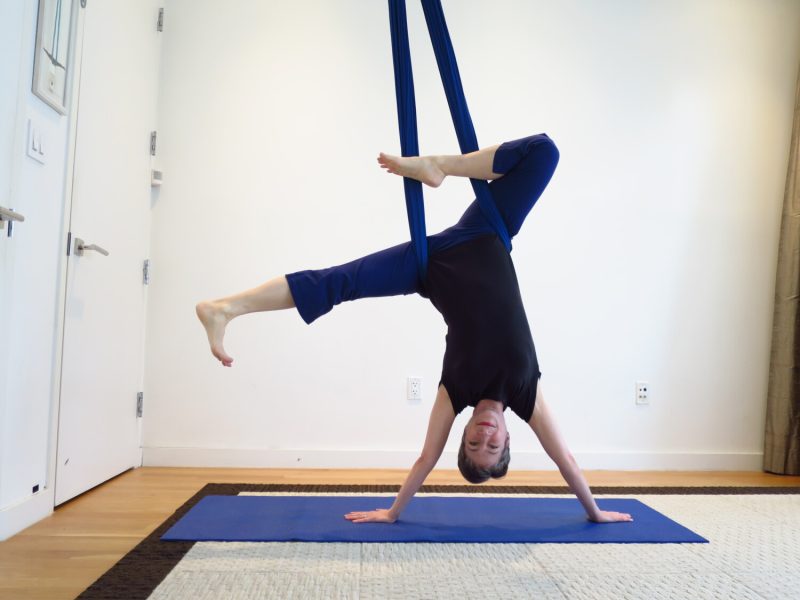
Traditional vs. Hammock-Assisted Yoga
Two styles. Same personal attention. Choose what feels right for your body and your day.
Traditional Yoga
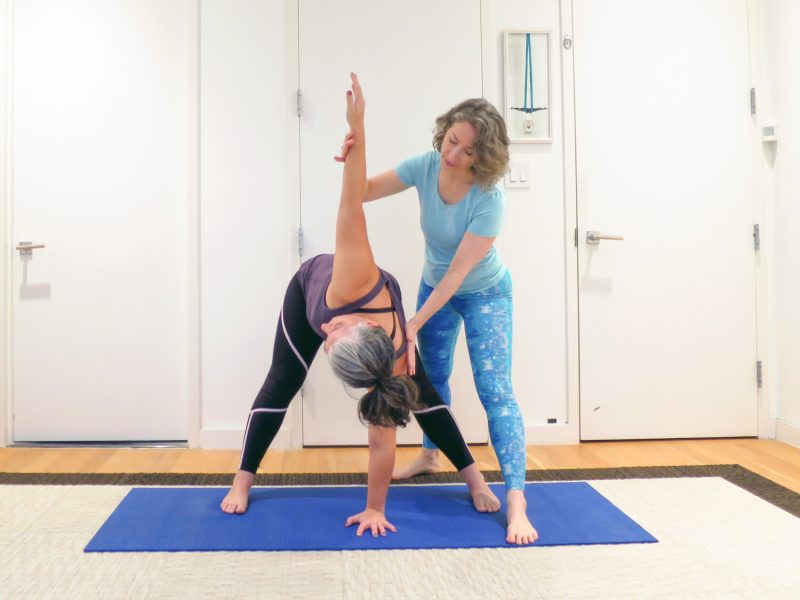
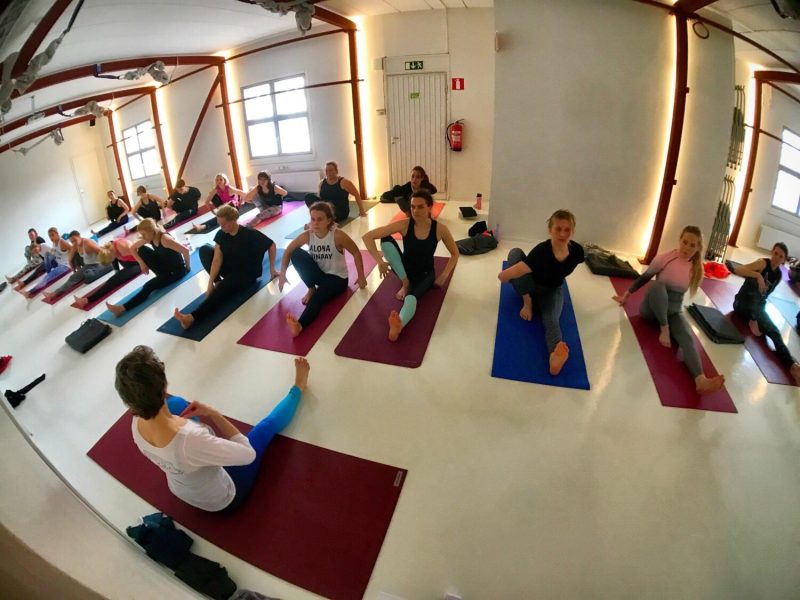
A steady, grounded practice that blends breath, movement, and alignment. You’ll move through accessible poses at a comfortable pace with space to pause, modify, and tune in. It’s about building strength, flexibility, and awareness, while giving your nervous system a chance to settle. No rush, no pressure, just clear, thoughtful movement designed to support you.
Hammock-Assisted Yoga
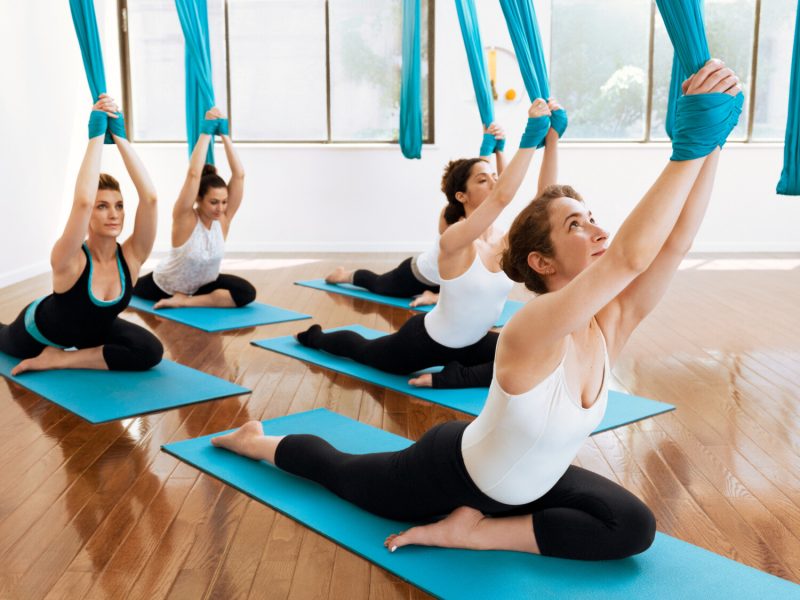
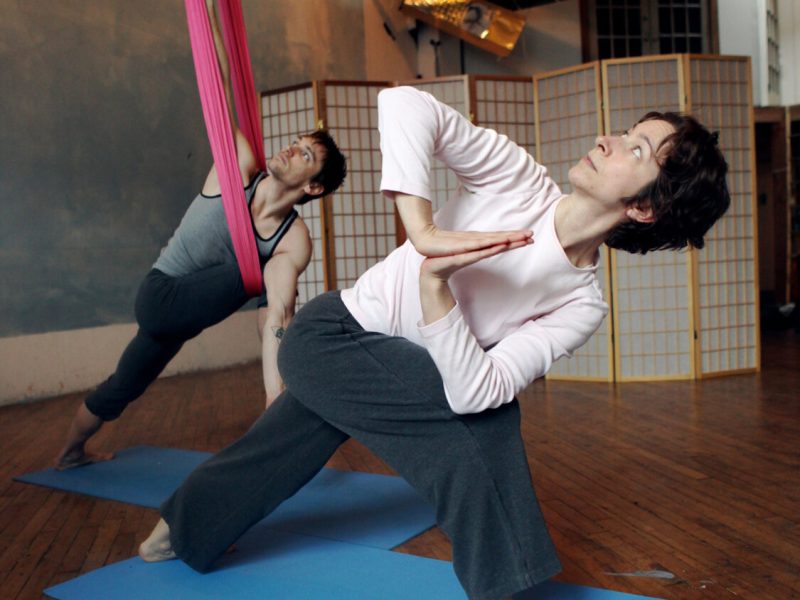
A gentle twist on tradition, using a soft fabric hammock for support and release. The hammock helps ease pressure on joints, deepens stretches, and invites playfulness into your practice. Whether you’re lightly supported or fully cradled, you’ll feel lighter, longer, and more relaxed. It’s calming, creative, and great for all levels.
Six Example Poses Compared
Below are a few common yoga poses, shown in two ways—one from a traditional mat-based class, and the other using a hammock for support. Along with each one, you’ll find a quick note about what the pose is for and how each version can benefit your body and practice.
Downward Facing Dog

In Downward Facing Dog, you press your hands into the mat, tuck your toes, and lift your hips high to gently invert the body. This stretches your hamstrings and calves while strengthening your arms and extending the shoulders, in order to draw in deeper breaths and soothe the nervous system. By drawing your spine long, you’ll also enjoy a calming boost of energy and circulation.
The hammock-assisted version bypasses the need for shoulder flexibility and endurance, the traditional version allows for deeper stretches in the legs and development of strength.
Warrior One Pose

Warrior One finds you standing with one foot forward, knee bent, and the back leg straight as you lift your arms overhead. It grounds you in strength, opens your hips and chest while building stability in your legs and core. Practicing this pose boosts endurance, and helps you feel both powerful and alert.
The hammock-assisted version helps develop better balance while avoiding lower back strain, the traditional version encourages fuller breaths, which is the part of a yoga practice that both de-stresses and increases vitality.
King Dancer Pose

In King Dancer, you stand on one leg, reach back to grasp the other foot or ankle, and lift it up behind you while extending your free arm forward. This backbend and balance combo stretches hip flexors, quads, and shoulders, while strengthening the standing leg and core. It develops grace, concentration, and heart-opening flexibility, leaving you more poised and confident.
The hammock-assisted version allows you to focus on spinal flexibility without reliance on good balance, the traditional version sharpens your mental focus and stillness.
Handstand Pose

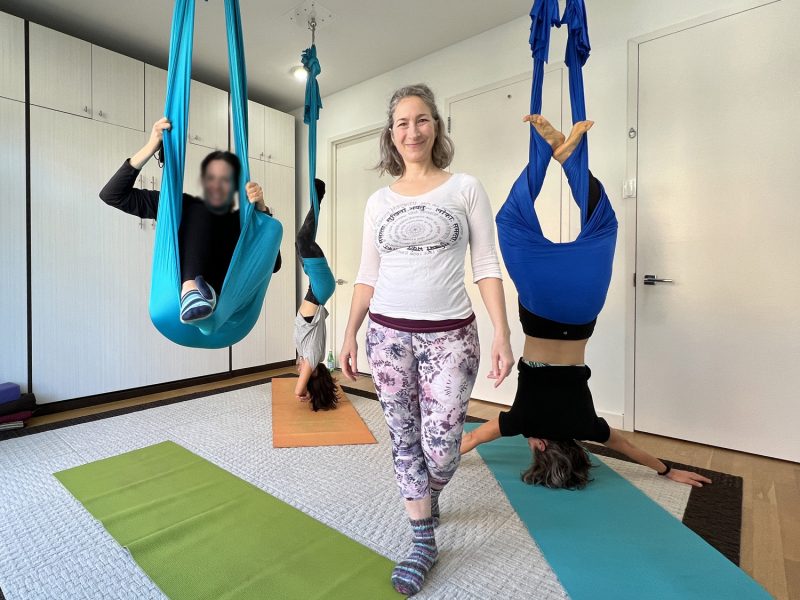
Handstand turns your world upside down as you press into your hands and lift your legs overhead in a straight line. It challenges your upper-body and core strength, builds wrist and shoulder stability, and improves circulation by bringing blood flow to your head. Beyond the physical gains, hanging upside down sharpens focus and can leave you feeling energized and exhilarated.
The hammock-assisted version will guide you to the alignment and spatial orientation of handstand if you’re new to the position, and if you’re experienced, will train your mind and body to be able to do unassisted handstands, eventually. Traditional Handstand, unassisted by a hammock, wall, or person, is nothing short of magical – calming and simultaneously boosting confidence.
Wheel Pose

Wheel is a full backbend where you press your hands and feet into the mat, lifting your chest toward the sky. It deeply opens the front body—chest, hip flexors, abdomen—and strengthens your arms, legs, and glutes as you hold the arch. This heart-opening pose improves spinal flexibility, boosts energy, and helps counteract slouching from daily life.
Hammock-assisted Wheel focuses mostly on comfortably developing flexibility. Traditional Wheel can be modified for your flexibility level, and its focus includes arm strengthening and vitalization along with developing flexibility.
Corpse Pose

Corpse pose is all about complete relaxation. Its purpose is to let the body integrate the work you’ve done, calm the nervous system, and relieve stress. Regularly finishing your practice in Corpse Pose promotes mental clarity, reduces tension, and leaves you feeling refreshed.
You may find Corpse pose inside the hammock to be more comfortable on your lower back, and the cocooning effect to assist your mind into deeper relaxation than usual.
You may find Corpse pose without the hammock allows your body and breath to feel limitless, and gives you more energy upon completion of the class.